
If you’re wondering what it takes to become a Master Facilitator and what this certification is all about, the answer is that you’ve developed your abilities to such an extent that you can confidently and expertly lead groups through difficult conversations, problem-solving sessions, and strategic planning. It involves regularly producing fruitful, interesting, & uplifting group experiences. And certification?
Consider it a means of formally acknowledging that advanced degree of expertise and experience, frequently via an organized course of study or evaluation. This guide will demystify the process and provide useful insights while guiding you through what that journey looks like. Fundamentally, a Master Facilitator is someone who organizes meetings for the best possible results rather than merely running them. They have a thorough awareness of human behavior, group dynamics, and successful communication techniques.
If you’re interested in pursuing a Master Facilitator Certification, you may find the article “Master Facilitator Certification: Complete Guide to Becoming a Professional Master Facilitator” particularly helpful. This comprehensive guide outlines the essential steps and skills needed to excel in this role. Additionally, for those looking to enhance their training capabilities, you can explore more resources and training opportunities at this link: Power Success Training.
It’s not about possessing all the answers, but rather about being able to extract them from the group’s collective intelligence. This individual serves as an impartial mentor, fostering a secure environment where everyone is respected and heard, resulting in cooperative decision-making & significant advancement. More than just basic moderation. Although anyone can theoretically facilitate a discussion, a Master Facilitator goes much further.
They foresee possible obstacles, gracefully handle challenging personalities, & make sure that the energy in the room is directed toward the desired outcomes. They are adept at planning every step of the process, from establishing precise goals to creating interesting exercises and deftly handling the unavoidable detours that occur during group projects. The Important Distinctions. Strategic Process Design: They carefully plan the session’s architecture to achieve precise, quantifiable results; they don’t just show up. Deep Knowledge of Group Dynamics: They are able to read the room, spot subtle power struggles, & take proactive measures to keep the atmosphere positive and productive.
Become a certified Master Facilitator and enhance your leadership skills at https://powersuccesstraining.com/master-facilitator
Mastery of Diverse Techniques: They possess a wide range of facilitation techniques and know which ones to use for various circumstances and group requirements. Emotional Intelligence and Presence: Their composed manner and sympathetic attitude promote open communication and trust. Emphasis on Results: Although the process is important, the ultimate goal is always to produce observable results & inspire action. A need for validation, increased credibility, or a structured path for professional development are frequently the driving forces behind the desire for certification. It can lead to more challenging & significant facilitation roles and shows a dedication to excellence. Beyond personal development, it’s about having the skills necessary to successfully manage even the most difficult group situations.
If you’re interested in enhancing your skills and credentials in facilitation, you might find the article on becoming a Quantum Facilitator particularly insightful. This resource provides valuable information on advanced techniques and strategies that can complement your journey towards achieving Master Facilitator Certification. To explore this further, check out the article on Quantum Facilitator training for a comprehensive understanding of the skills needed to excel in this field.
increasing trustworthiness & credibility. Possessing a recognized certification in the workplace sends a strong message to coworkers, employers, and clients. It conveys that you’ve completed extensive training & been evaluated by professionals, giving you confidence in your skills. When accepting high-stakes facilitation projects or making a pitch for consulting work, this can be especially crucial. organized skill development.
The purpose of certification programs is to methodically advance fundamental facilitation abilities. They frequently address sophisticated methods, stakeholder management, conflict resolution, and strategic thinking, offering a thorough education that could be challenging to obtain through trial and error alone. This methodical approach guarantees that you address every crucial facet of master-level facilitation.
availability of advanced opportunities. For their leadership retreats, strategic planning sessions, and complex change initiatives, many organizations—particularly larger corporations or consulting firms—prefer or even need certified facilitators. As a result, certification can grant you access to more difficult and senior roles, enabling you to have a bigger influence. Professional & Personal Development. The path to becoming a Master Facilitator is fundamentally one of personal development.
It necessitates self-awareness, ongoing education, & a readiness to take on challenges. A deeper understanding of oneself as a facilitator is facilitated by the certification process, which frequently entails reflective practice, peer review, and the application of acquired skills in practical situations. The majority of respectable certification programs have similar components intended to evaluate and enhance advanced facilitation skills, even though the precise structures differ. These usually entail a combination of rigorous evaluation, practical application, and theoretical learning.
Attending workshops is not enough; mastery must be demonstrated. extensive curriculum. Programs for certification will cover more complex subjects than just basic facilitation. This entails being aware of advanced conflict resolution strategies, organizational psychology, strategic frameworks, and group innovation techniques.
The curriculum’s goal is to establish a solid theoretical basis. Skill development & practical application. Merely understanding the theory is insufficient. Practical experience is usually required for certification. This could entail conducting practice sessions, simulating intricate situations, or even supervising real client interactions.
The emphasis is on converting knowledge into practical abilities. Evaluation and evaluation. The “master” part really comes into play here. Your proficiency in using facilitation concepts will be evaluated.
There are several ways to do this. Feedback and Observation: Skilled facilitators will watch you run sessions and offer thorough, helpful criticism. Case Studies: You may be required to analyze intricate group situations & create plans for their facilitation. Written exams: To gauge your comprehension of best practices and theoretical ideas. Presenting session plans, client endorsements, and outcome reports as proof of your facilitation work is known as a portfolio review.
guidance and mentoring. Mentorship and coaching components are incorporated into many programs. This offers helpful one-on-one advice, enabling you to talk about difficulties, improve your strategy, and get individualized support throughout your educational journey. When navigating the challenges of master-level facilitation, a competent mentor can be quite helpful.
There are a number of typical routes people take rather than a single, recommended path. These frequently rely on the particular certification bodies you want to align with, your learning style, & your past experience. The secret is to actively look for chances to develop your abilities & push your limits. formal courses of instruction.
Maybe the easiest path is this one. Seek out reputable training institutions that provide thorough Master Facilitator certification courses. These usually entail coursework, rigorous workshops, and an official evaluation procedure. Look into their trainers’ reputations and accreditation.
Certification by Experience. A portfolio of successful facilitation work and a wealth of practical experience are prerequisites for certification offered by certain organizations. This approach frequently calls for you to submit references, record your experience, and have your work thoroughly reviewed. If you have a substantial track record already, that is ideal. Courses in Advanced Professional Development.
Advanced courses in topics like organizational change, conflict resolution, and strategic planning facilitation can develop the requisite skills, though they may not always result in a direct “Master Facilitator” title. After that, you can create your own portfolio for recognition or combine these with other evaluation methods. Developing Capabilities: A Gradual Approach. Becoming a Master Facilitator is an ongoing learning process, regardless of the particular certification path.
The following are involved. Seeing Great Facilitators: Attend sessions or view recordings to learn from the best. Seeking Feedback: Make an effort to ask peers and participants for helpful criticism. Reflective Practice: Evaluate your own facilitation on a regular basis, noting what went well, what didn’t, and why. Reading and Research: Keep abreast of the most recent developments in group facilitation techniques, research, and trends. Being “masterful” involves more than just following a script; it also entails having a complex set of abilities that enable you to innovate, adapt, and lead teams successfully in any circumstance.
These are abilities that are refined via intentional practice and time. Powerful questioning and attentive listening. The foundation is this. A master facilitator is able to discern subtleties, feelings, and unsaid messages in addition to hearing words.
They pose inquiries that elicit more thought, reveal presumptions, and advance the discussion in a positive way. Objectivity and content neutrality. It’s important to remain neutral. The job of a Master Facilitator is to guide the process, not to introduce their own prejudices or opinions into the subject matter.
This fosters trust & guarantees that different points of view can be expressed in the group. Management of Group Processes. This includes everything from managing time & establishing the agenda to encouraging inclusive participation & resolving conflicts. It’s about establishing an atmosphere that allows the team to perform at its highest level.
Recognizing and utilizing group dynamics. The ability to read the room is a skill of master facilitators. To guarantee that everyone participates, they are able to recognize power disparities, read nonverbal clues, and proactively handle issues like dominant voices or passive participation. De-escalation and conflict resolution. Group conflict is unavoidable.
Instead of avoiding it, a Master Facilitator views it as a chance for personal development. They are adept at resolving conflicts, identifying points of agreement, and guiding the group toward positive outcomes. Flexibility & flexibility.
Every group and every session is different. A master facilitator has the flexibility to modify their strategy in response to the demands of the group, their level of energy, and any unforeseen developments in the conversation. This calls for a wide range of methods as well as the intuition to apply them successfully.
Creating Interesting Experiences. Master Facilitators create experiences, not just conduct meetings. This entails employing a range of strategies to keep participants interested and productive, from icebreakers and energizers to structured problem-solving tools and innovative brainstorming techniques. Summarizing and communicating clearly. It’s critical to be able to clearly communicate complicated concepts, summarize important ideas, and make sure everyone is in agreement.
This keeps everyone in the group on the same page & avoids misunderstandings. You create the foundation for both obtaining certification and genuinely living up to the ideals of a Master Facilitator in your practice by honing these abilities.
.
FAQs
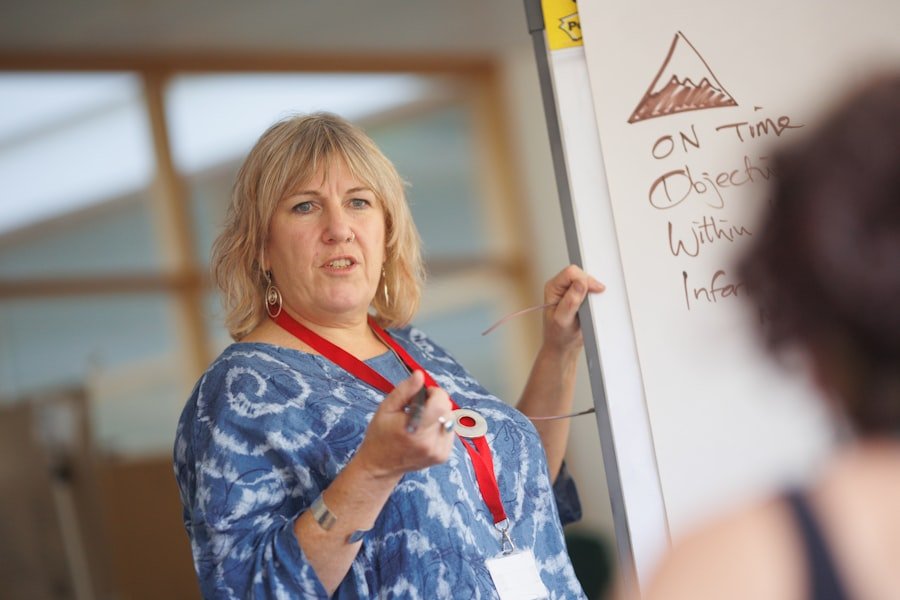
What is a master facilitator certification?
A master facilitator certification is a professional credential that demonstrates an individual’s expertise in facilitating group discussions, meetings, and workshops. It signifies that the individual has completed a comprehensive training program and has demonstrated mastery of facilitation skills.
What are the benefits of obtaining a master facilitator certification?
Obtaining a master facilitator certification can lead to increased career opportunities, higher earning potential, and greater credibility in the field of facilitation. It also provides individuals with a structured framework for honing their facilitation skills and staying current with best practices in the industry.
How can one become a certified master facilitator?
To become a certified master facilitator, individuals typically need to complete a formal training program that covers advanced facilitation techniques, leadership skills, and group dynamics. They may also need to demonstrate their facilitation abilities through practical assessments and evaluations.
What are the prerequisites for pursuing a master facilitator certification?
Prerequisites for pursuing a master facilitator certification may include prior experience in facilitation, completion of foundational facilitation training, and a commitment to ongoing professional development in the field. Some certification programs may also have specific educational or professional requirements.
Where can one obtain a master facilitator certification?
Master facilitator certifications are offered by various professional organizations, training institutes, and consulting firms. Individuals can research different certification programs to find one that aligns with their career goals and professional development needs.