
As a facilitator, you want to increase group engagement. The key is to create an atmosphere where everyone feels respected, heard, and genuinely interested in the result. It’s more about purposeful design and deft handling of human dynamics than it is about fancy tricks.
Consider it similar to being a good host: you set the scene, provide direction, and ensure that everyone enjoys themselves and makes a significant contribution. Much of the engagement work is already completed before you even speak. This involves anticipating, comprehending, and actively influencing the context rather than merely going over your agenda.
Master facilitator techniques are essential for enhancing group engagement and fostering productive discussions. For those looking to deepen their understanding of these techniques, a related article can be found at Master Facilitator Techniques for Quantum Facilitators. This resource provides valuable insights into advanced facilitation strategies that can significantly improve group dynamics and participation.
Have a thorough understanding of your audience. You can better tailor your approach if you know these people’s backgrounds, roles, & personal stakes in this conversation. Pre-meeting surveys: A brief, anonymous survey can identify areas of expertise, unspoken worries, or even a general attitude. Stakeholder interviews: A few casual conversations with important participants can yield priceless information about group dynamics or possible obstacles.
Examining previous exchanges: If this isn’t a brand-new group, make a list of who usually speaks, who is quiet, and who has a tendency to take charge. Developing an Appealing Mission. It is not a rhetorical question to ask, “Why are we here?”. Your North Star is an inspiring, pertinent, and unambiguous purpose. Beyond the agenda item: Don’t merely say, “Talk about the Q3 budget.”. “Strategize how we can effectively allocate resources to hit our Q3 growth targets and empower our teams” is how you should phrase it.
Become a certified Master Facilitator with Power Success Training at https://powersuccesstraining.com/master-facilitator
The “. Making the connection to individual impact: Clearly state how this conversation or choice affects each person present. WIIFM (What’s In It For Me): Clearly state the advantages of participating.
Master facilitator techniques are essential for enhancing group engagement and ensuring productive interactions during workshops and meetings. For those looking to deepen their understanding of these techniques, a related article can provide valuable insights and practical strategies. You can explore more about effective facilitation methods by visiting this resource, which offers comprehensive training options tailored to various needs. By implementing these techniques, facilitators can create an environment that fosters collaboration and encourages active participation from all group members.
Is it solving problems, honing skills, or advancing a bigger objective? Creating with Engagement in Mind. Your agenda is a road map for communication, not merely a list. Different kinds of activities: Don’t just spend two hours lecturing.
Incorporate brainstorming, small group discussions, introspection, and interactive exercises. Strategic timing of breaks: Taking regular breaks allows for informal networking, information processing, and fatigue prevention in addition to physical comfort. Icebreakers with a purpose: If the fluffy “two truths & a lie” doesn’t have a purpose, skip it. Create an intro that relates to the theme of the session or promotes particular kinds of engagement. For instance, “Explain one expectation you have for this meeting and one difficulty you foresee.
A “. You become the conductor after the meeting starts instead of the designer. You’re actively controlling your energy, focusing, and making sure your contribution is balanced. mirroring & attentive listening.
Hearing words is only one aspect of this. It involves comprehending the underlying message, feelings, and goals. Summarizing & paraphrasing: “I understand that you’re worried about X because of Y. “Is that correct?” The speaker feels heard and their comprehension is confirmed. Emotional reflection: “You seem to be dissatisfied with the way things are going. “Tension can be reduced & problem-solving can begin when emotion is acknowledged. Nonverbal clues: Be mindful of your body language.
If someone appears perplexed, uninterested, or eager to talk, gently address these cues. Asking strategic questions. Your most effective weapon is a question. They are able to elicit information, question presumptions, and promote more in-depth reflection.
Ask open-ended questions instead of just “yes/no.”. “What alternative approaches have we considered?” or “How do you foresee this impacting the team?”.
“Can you tell me more about that?” or “What led you to that conclusion?” are examples of probing questions that help delve deeper into concepts.
“What assumptions are we making here?” or “What might be the unintended consequences of this approach?” are examples of challenging questions that can be used to promote critical thinking. Redirecting questions: “That’s an interesting point, & how does that connect back to our objective of [reiterate objective]?” is a gentle way to steer a conversation back on course when it strays. Controlling group dynamics. There are personalities within every group.
It’s your responsibility to control their influence on the conversation rather than to alter them.
“We’ve heard from a few people; is there anyone else who hasn’t shared their perspective yet?” or straightforward inquiries like “[Quiet Participant’s Name], what are your thoughts on this?” can be used to encourage quiet voices.
“Thank you for sharing so much, [Dominant Participant’s Name],” is a gentle way to control dominant voices. Let’s hear from a few more people now,” or “I’m going to jump in here and move us on to the next point to make sure we hear from everyone.”. The “. Managing disagreement in a positive way: “It appears that we have different opinions here. Can we investigate the fundamental causes of those discrepancies?
Pay attention to the problem rather than the individual. “In this case, let’s assume good intentions. A “. Using a “parking lot”: Use a different flipchart to record any important but tangential ideas that come to mind. “That’s a good point; let’s leave it in the parking lot and talk about it later, if we have time. This acknowledges the point without taking the conversation off course.
Being genuinely involved goes beyond simply being present. Your methods should make it simple and satisfying for everyone to contribute. using tools and visual aids. Visuals organize ideas and simplify difficult concepts; they are more than just decorative. Use whiteboards & flipcharts to record ideas, create diagrams, keep track of decisions, & display the agenda.
This shared record fosters understanding. Mural/Miro boards (digital whiteboards): In remote or hybrid environments, these are indispensable tools for group brainstorming, voting, and real-time input from numerous participants. Sticky notes: Great for group prioritization exercises, fast categorization, and individual brainstorming. They enable anonymous input, which is helpful when discussing delicate subjects.
Methods of Organized Brainstorming.
“Just throw out ideas” might result in silence or mayhem. More robust ideation is encouraged by particular techniques. Round Robin: As you move around the room, each person should offer one idea at a time.
This guarantees that everyone speaks. Brainwriting (6-3-5 method): After coming up with ideas in private, participants pass their sheets and build on each other’s ideas. Excellent for introverts and rapid idea generation.
“What If” and “How Might We” questions: These framing questions promote original thought and creative problem-solving. “How might we appeal to a younger demographic with our new product?”. Mapping affinity and setting priorities. After you have ideas, you must arrange them & make a decision.
Affinity Mapping/Grouping: Gather sticky notes on a wall and work together to identify themes and categories. This lessens overwhelm and enables the group to see patterns. Dot Voting: Distribute stickers or markers to participants, then ask them to cast their votes for their top priorities or ideas. This is a fast and efficient method of determining group sentiment and reducing the number of options.
Impact/Effort Matrix: Plot concepts on a grid according to their potential impact and effort requirements. Start by concentrating on low-effort, high-impact items. This gives decision-making and prioritization a methodical approach. Engagement is a continuous process. It goes beyond the immediate gathering. Clearly defined responsibilities & next steps.
The uncertainty of “what happens next” can ruin an engagement. Summary of decisions: “We have decided to implement X, Y, and Z, just to be clear. The “.
Give owners specific names and deadlines. For example, “Who will take the lead on X? By when will we have an update on Y?”. Describe the follow-up procedures: When is the next check-in? How will progress be monitored?
Summarize actions: Improve accountability and maintain momentum by distributing a clear action log soon after the meeting. requesting input regarding the facilitation. Act as you speak. You must be willing to make improvements to your own process if you want engagement. Simple anonymous questions like “What worked well?
What could be improved for next time?” should be included in a brief post-meeting survey. Verbal check-out: Ask “What’s one takeaway you’re leaving with?” or “One word to describe how you feel about the session” at the conclusion. Introspection: Evaluate your own performance. What cues did you overlook, where could you have made a different intervention, and which techniques worked best for the group? establishing an engaged culture.
The goal of true master facilitation is to create an atmosphere where active engagement is the standard, not just one meeting. Be present, listen intently, & pose perceptive questions to set an example of desired behavior. Your behavior speaks louder than any directive. Celebrating contributions: Give credit for well-thought-out suggestions, perceptive inquiries, & successful dispute resolution. “Thank you for bringing up that very insightful point, Sarah.
The “. Encouraging others to facilitate: Ideally, group members will eventually pick up some of your strategies, resulting in more autonomous, active conversations even when you’re not actively leading them. Always learning and changing: Every group is unique, & every session brings with it fresh difficulties.
Be open to trying new things, stay inquisitive, and learn new methods. It is a journey rather than a destination to become an expert facilitator. It involves an ongoing process of preparation, observation, adaptation, and deliberate engagement. You will observe a discernible increase in engagement and, as a result, in the caliber of your group’s output by concentrating on these useful strategies & embracing a service-oriented mindset.
.
FAQs
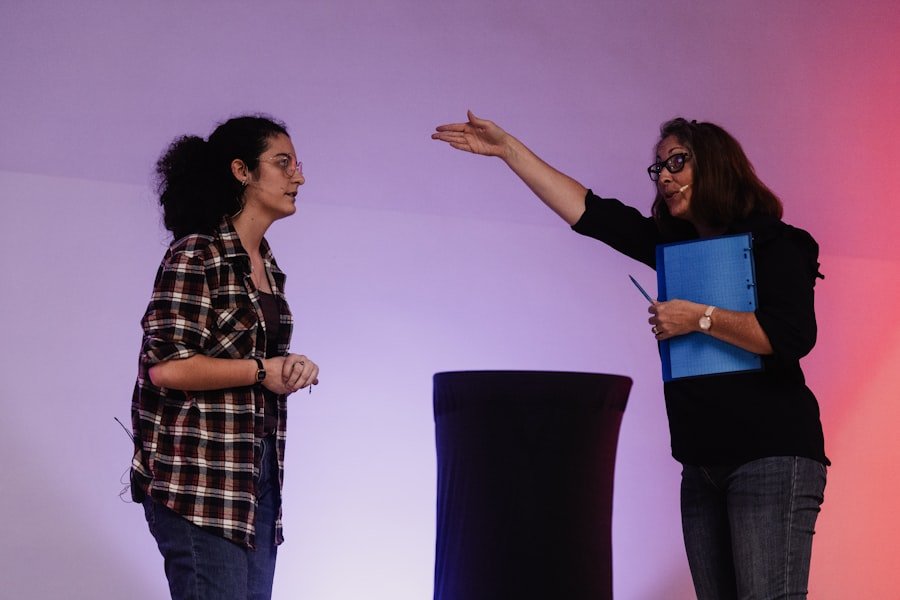
What are master facilitator techniques?
Master facilitator techniques are advanced skills and strategies used by facilitators to improve group engagement, communication, and collaboration during meetings, workshops, and other group activities. These techniques are designed to create a more inclusive and productive environment for all participants.
How can master facilitator techniques improve group engagement?
Master facilitator techniques can improve group engagement by promoting active participation, fostering open communication, and creating a supportive and inclusive atmosphere. These techniques can also help to manage group dynamics, resolve conflicts, and ensure that all voices are heard and valued.
What are some examples of master facilitator techniques?
Examples of master facilitator techniques include active listening, effective questioning, group brainstorming, consensus building, decision-making processes, conflict resolution, and creating a safe space for open and honest communication. These techniques are designed to enhance group dynamics and improve overall engagement.
Why are master facilitator techniques important?
Master facilitator techniques are important because they can help to maximize the potential of group interactions, leading to more effective and efficient meetings, workshops, and collaborative activities. By using these techniques, facilitators can create a more positive and productive environment for all participants.
How can one learn master facilitator techniques?
One can learn master facilitator techniques through training programs, workshops, and professional development opportunities. There are also resources available, such as books, articles, and online courses, that provide guidance on mastering facilitation techniques. Additionally, gaining practical experience and seeking mentorship from experienced facilitators can also be valuable in learning these techniques.