
The majority of master facilitator training programs in Malaysia concentrate on giving seasoned facilitators cutting-edge abilities to manage intricate group dynamics, create effective interventions, and conduct life-changing sessions. These courses usually cover topics like conflict resolution, systemic thinking, & developing genuinely engaging learning environments in addition to basic facilitation techniques. It takes a fundamental change in your approach to group work to become a master facilitator, not just more experience. Advanced training recognizes that real-world groups frequently present complex challenges, even though foundational facilitation courses cover the fundamentals—setting agendas, controlling discussions, & promoting participation.
This entails switching from a strictly process-driven strategy to one that incorporates organizational system knowledge, strategic thinking, and emotional intelligence. Beyond Fundamental Methods. Consider basic facilitation as making sure a meeting goes well and that everyone has an opportunity to speak. On the other hand, deeper results are the goal of advanced facilitation.
For those interested in enhancing their facilitation skills, the article on Master Facilitator Training in Malaysia offers valuable insights into advanced techniques that can elevate your effectiveness as a facilitator. You can explore more about this training and its benefits by visiting this link. This resource provides comprehensive information on various training programs available in Malaysia, helping you to choose the right path for your professional development.
It involves making sure that the group not only makes decisions but also takes ownership of them, that disagreements are settled amicably, and that the process of learning or solving problems increases group capacity. This calls for a far more advanced toolkit, which includes methods for subtly altering group energy, rephrasing difficult statements, and deep listening. Recognizing group dynamics. A deep comprehension of group dynamics is one of the main tenets of master facilitator training. Recognizing power disparities, covert agendas, groupthink tendencies, & resistance are just as important as identifying extroverts and introverts.
Instead of controlling the discussion, a skilled facilitator can identify these dynamics in real time & take appropriate action by fostering an environment where the group can resolve these problems on its own. This could entail organizing particular exercises, posing thought-provoking queries, or even knowing when to take a back seat & let tensions naturally arise in a safe setting. Advanced facilitator training programs consistently include a number of core content areas, even though specific curricula differ amongst Malaysian providers. These fields are intended to expand on a foundation of facilitation skills by adding layers of expertise.
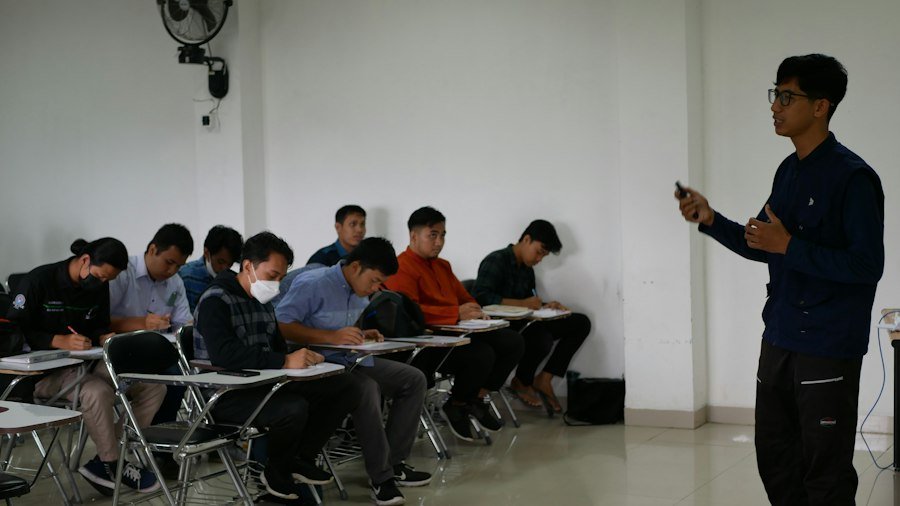
Join us for an exclusive Training Seminar to enhance your skills. The Training Seminar will cover the latest industry trends. Don’t miss the opportunity to network at the Training Seminar.
Creating Experiences That Change People. This goes beyond just creating a schedule. It entails comprehending the fundamentals of adult learning, creating activities that encourage deep engagement and retention, and establishing a psychological environment where participants feel comfortable challenging, exploring, and developing. It covers topics like these. Creating Interesting Plans.
Master Facilitator Training in Malaysia focuses on enhancing advanced facilitation skills, which are essential for effective group dynamics and decision-making processes. For those interested in exploring further, a related article on Quantum Facilitator Training offers insights into innovative facilitation techniques that can complement the skills learned in the Master Facilitator program. You can read more about it in this article. This resource provides valuable information for facilitators looking to elevate their practice and achieve greater impact in their sessions.
An advanced agenda is a well-planned journey rather than merely a list of topics. This entails pacing, taking into account different learning styles, and taking into account the emotional arc of a session. It also entails incorporating flexibility to adapt to changing group needs without losing sight of the main goals. This entails understanding how to effectively transition between divergent (brainstorming) & convergent (decision-making) thought processes in design.
Designing Experiential Learning. Beyond just giving presentations, skilled facilitators learn how to create exercises that let participants experience ideas instead of just hearing about them. Simulations, role-playing, case studies, & organized problem-solving activities could all be used in this. In order to ensure that knowledge is internalized and applicable to real-world circumstances, the focus is on active participation and reflection. This also entails knowing how to effectively debrief experiential activities, connecting the experience to the learning objectives, & extracting important insights.
Handling Flow & Energy. A skilled facilitator has a keen sense of the energy in the space. This entails identifying when the group’s energy is low and how to reenergize it, as well as when it is too high and needs to be redirected. Strategic use of breaks, a variety of activity types, movement, & the use of various levels of interaction (individual, small group, whole group) are some of the techniques.
Maintaining the best possible level of focus and engagement throughout the session is the aim. Advanced Intervention and Communication Skills. The foundation of facilitation is effective communication, but advanced training elevates these abilities to the level of an art.
It involves more than just active listening; it also involves asking thoughtful questions, handling challenging situations, and stepping in to empower the group. Asking strategic questions. Master facilitators learn how to use questions as effective tools for diagnosis, introspection, challenge, & future-pacing in addition to open-ended questions. This involves posing thought-provoking, clarifying, hypothetical, & perspective-shifting questions.
Asking the right question at the right moment can help a group that is stuck move forward & gain new insights. It’s not just about knowing what to ask; it’s also about knowing why. constructively handling conflict.
In group environments, conflict is unavoidable, & a skilled facilitator sees it as a chance for development rather than something to be avoided. Various conflict resolution models, de-escalation strategies, dispute mediation, and assisting groups in identifying points of agreement or mutually beneficial solutions are all covered in this field of training. It also entails teaching facilitators how to remain impartial and control their own emotional reactions to conflict.
This could entail strategies like rephrasing, actively listening for underlying needs, & encouraging conversation rather than argument. Difficult and encouraging. A skilled facilitator understands when to offer encouragement & reassurance and when to question a group’s presumptions, prejudices, or comfort zones. This balance is delicate. Pointing out contradictions, presenting different viewpoints, or encouraging more in-depth contemplation are some examples of challenging.
Creating a safe space for vulnerability, acknowledging progress, and validating feelings are all part of providing support. Knowing which strategy is required and using it effectively and empathetically are the key components of skill. Systemic Thought and Organizational Setting. Every group works in a vacuum. Understanding the larger organizational & systemic context in which a group operates is a key component of advanced facilitation training.
This entails looking past the current task to comprehend the organizational culture, history, and underlying power structures that may have an impact on group dynamics & results. Organizational dynamics. This entails being aware of how group behavior and decision-making are influenced by organizational culture, leadership philosophies, political environments, and historical occurrences.
A skilled facilitator can lead a group toward more comprehensive solutions by assisting them in realizing that their current problems are frequently signs of more significant systemic problems. Identifying stakeholders outside of the room and taking into account their viewpoints is part of this. collaborating with various stakeholders. Individuals with widely disparate backgrounds, roles, and interests frequently make up groups. Proficient facilitators acquire techniques for successfully involving a variety of stakeholders, guaranteeing that every voice is heard, & fostering agreement among divergent points of view.
This could entail particular methods for facilitating conversations between hierarchical levels or for intercultural communication. Managing Huge Groups. Master facilitator programs frequently include methods for leading very large groups (20+ to hundreds of participants), whereas foundational training frequently concentrates on smaller groups. To guaranty engagement and participation on a larger scale, this calls for various logistical considerations, activity design, and management techniques.
This might entail employing world cafés, open space technology, or other large-group approaches. Malaysia has a distinct need for highly qualified facilitators due to its dynamic corporate and public sector environment. Because of the nation’s rich cultural diversity, group interactions are made more complex and rich, which makes advanced facilitation skills especially beneficial.
Local versus… worldwide suppliers. Attendees in Malaysia have a variety of options, from international providers who offer global best practices and frequently a more standardized curriculum to local training organizations that are aware of the unique subtleties of Malaysian culture and business practices.
Each has a benefit. While international programs may offer more networking opportunities and exposure to global trends, local providers may offer more culturally appropriate scenarios & case studies. Also, a lot of Malaysian local providers work with foreign specialists to combine both viewpoints. A certification or accreditation. Although there isn’t a single, universal “master facilitator” certification, numerous respectable training institutions provide their own advanced certification pathways. When thinking about a program in Malaysia, it’s important to find out about its accreditation, the thoroughness of its evaluation procedure, and whether or not professional associations or the industry recognize its certification.
Continuing Professional Development (CPD) points, which are useful for preserving professional credentials, may be offered by some programs. methods of blended learning. In Malaysia, blended learning models are becoming more and more popular in master facilitator training. Peer coaching, online pre-work, post-session assignments, & virtual follow-up sessions are frequently combined with intensive in-person workshops. In addition to allowing for more flexibility and deeper learning integration, this method gives participants the chance to practice new skills in real-world contexts in between modules.
Given the popularity of remote and hybrid work models, the transition to virtual facilitation skills has also become crucial. Those whose primary job title is “facilitator” are not the only ones who can benefit from master facilitator training. It helps a variety of professionals who frequently lead teams, collaborate with groups, or spearhead organizational change. competent facilitators. The most evident group is this one.
These programs are invaluable for seasoned facilitators who want to take on more challenging engagements or who feel they’ve reached a plateau. It provides a chance to hone current abilities, pick up new techniques, and broaden their professional toolkit. Also, it gives them an opportunity to reflect on their work and gain knowledge from colleagues and seasoned professionals. leaders & supervisors.
Whether they are aware of it or not, managers & leaders are always facilitating. The capacity to steer group discussions, settle disputes, and promote consensus is essential for everything from team meetings to strategic planning sessions. They become more adept at inspiring their teams, encouraging teamwork, & accomplishing organizational goals thanks to master facilitator training. It improves their capacity to establish psychological safety and provide their teams the tools they need to solve problems.
coaches and advisors. Consultants frequently assist client organizations in resolving challenging issues or putting novel ideas into practice. They can co-create solutions, ensure buy-in, and guide clients through challenging conversations when they have mastered the art of facilitation. These abilities can be used by coaches, especially executive or team coaches, to help their clients think and act in new ways.
It enables them to interact with teams or larger stakeholder groups more successfully than they could in a one-on-one setting. Experts in learning and development and human resources. Designing and implementing training programs, supporting talent development initiatives, and overseeing organizational change are frequently the responsibilities of HR and L&D specialists. They can manage group dynamics in training sessions, design more captivating learning experiences, and successfully lead organizational development interventions thanks to their advanced facilitation skills.
They become more skilled at creating workshops that have an impact and cultivating a culture of lifelong learning. It takes careful thought to choose the best master facilitator training program. It’s important to match the program with your unique needs and professional objectives because it’s an investment of time and money. Evaluate your objectives and current skill level.
Make an honest assessment of your present facilitation strengths and areas for improvement before looking at programs. What particular difficulties do you currently encounter in your facilitation work? Do you want to focus on a certain field (e.g. The g. conflict resolution, large-group facilitation, strategic planning)?
Having specific objectives will make it easier for you to find programs that best suit your needs. Content and Methodology of Research Programs. Look beyond the program’s title alone. Examine the comprehensive curriculum. Are the advanced subjects you’re interested in covered?
What approaches do they use? A g. Is there a good balance between theory and practical application?
Seek out programs that prioritize real-world application & hands-on practice. Assess the experience & knowledge of trainers. It is crucial that the trainers are of high quality.
Seek out facilitators with a solid foundation in adult learning principles & pertinent subject matter expertise in addition to their extensive facilitation experience. Verify their qualifications, read their testimonials, and, if you can, talk to previous participants. A competent instructor will be able to impart not only theoretical knowledge but also personal experiences and insights. Think about logistics & program structure. Consider the length, location, and format (online-only, blended learning, intensive workshop).
What kind of pre-work or post-program support is available? What are the class sizes? Smaller class sizes typically allow for more individualized attention and practice opportunities. Does it fit your schedule and learning preferences?
Become familiar with certification and support. If you value certification, be aware of the prerequisites. Does the program provide resources, a network of alumni, or a community of practice?
Ongoing education and peer connections can be just as beneficial as the actual training. Find out if there are any post-program mentorship or peer coaching opportunities. The ultimate goal of investing in master facilitator training in Malaysia is to improve your capacity to lead groups through difficult situations, promote significant teamwork, and produce significant results. It’s a journey from good to exceptional, enabling you to become a genuine change agent in any kind of group environment.
.
FAQs
What is Master Facilitator Training Malaysia: Advanced Facilitation Skills?
Master Facilitator Training Malaysia: Advanced Facilitation Skills is a specialized training program designed to enhance facilitation skills for professionals in Malaysia. It focuses on advanced techniques and strategies to effectively lead group discussions, workshops, and meetings.
Who can benefit from Master Facilitator Training Malaysia: Advanced Facilitation Skills?
Professionals from various industries such as corporate, education, non-profit organizations, and government sectors can benefit from this training. It is suitable for individuals who have some experience in facilitation and want to further develop their skills.
What are some key topics covered in Master Facilitator Training Malaysia: Advanced Facilitation Skills?
Some key topics covered in this training program include advanced communication techniques, conflict resolution strategies, designing engaging activities, managing difficult participants, and creating inclusive environments for diverse groups.
How long is the Master Facilitator Training Malaysia: Advanced Facilitation Skills program?
The duration of the training program may vary, but typically it can range from a few days to a week, depending on the intensity and depth of the content covered. Participants can expect a comprehensive and hands-on learning experience.
What are the benefits of completing Master Facilitator Training Malaysia: Advanced Facilitation Skills?
Completing this training program can lead to improved facilitation skills, increased confidence in leading group discussions, enhanced ability to manage challenging situations, and a competitive edge in the professional market. Participants can also expand their network and gain recognition as a skilled facilitator.