
You may be wondering what a “Master Facilitator Workshop for Business Leaders and Entrepreneurs” entails. To put it briefly, it’s a targeted program that gives you the tools you need to effectively lead meetings, conversations, & strategic sessions. Without necessarily “leading” in the conventional sense, think of it as elevating your capacity to bring out the best in others, influence choices, & ensure that everyone feels heard & respected. The goal is to unlock collective intelligence for your company.
Your days are likely filled with conversations if you are an entrepreneur or business leader. Your success is directly impacted by your ability to handle these interactions, from client presentations & strategic planning to team meetings and brainstorming sessions. Without strong facilitation skills, you might find yourself:. Meetings are dragging on and yielding no conclusive results.
The Master Facilitator Workshop for Business Leaders and Entrepreneurs is designed to enhance the skills necessary for effective leadership and collaboration in today’s dynamic business environment. For those interested in further exploring the benefits of such training, a related article can be found at this link: Power Success Training, which provides insights into various training programs available for professionals looking to elevate their facilitation skills and drive organizational success.
Quieter, insightful ideas are overshadowed by dominant voices. Resistance results from decisions being made without support. Innovation is hampered when ideas are obscured by background noise.
Team morale is declining as a result of members feeling ignored or ineffective. A skilled facilitator is someone who shapes the meeting to be inclusive, productive, and ultimately impactful. The goal of this workshop is to improve listening skills, ask insightful questions, and foster environments that foster the development of innovative ideas & workable plans, not to increase communication. The main issue is ineffective interactions.
Become a certified Master Facilitator and enhance your leadership skills at https://powersuccesstraining.com/master-facilitator
Many of us have experienced meetings that seem to last forever. Individuals converse with one another rather than with one another. By the end, everyone is left wondering what was truly accomplished, if anything at all, as agendas are forgotten & tangents abound. This is not only annoying, but it also depletes resources, creativity, and eventually the profitability of your company. The Cost of Inaction: Consider the amount of valuable time that staff members spend in meetings.
The Master Facilitator Workshop for Business Leaders and Entrepreneurs is designed to enhance leadership skills and foster effective communication within teams. Participants can benefit from a variety of techniques that promote collaboration and innovation in the workplace. For those interested in exploring similar opportunities, a related article on the Quantum Facilitator Program offers insights into advanced facilitation methods that can further empower leaders. You can read more about it in this article.
Your company will incur a sizable, unstated expense if those meetings are ineffective. Missed Opportunities: Your company loses out on possible innovation, problem-solving, & strategic advantages when good ideas aren’t discovered or thoroughly investigated. Wasted Energy: Disengagement & a general feeling of futility can result from frustration with ineffective meetings. What a Skilled Facilitator Offers. Like a conductor, a skilled facilitator ensures that everyone participates, controls the flow of discussion, and leads the group to a consensus or decision.
Instead of promoting their own agenda, they are impartial & concentrate on the group’s requirements and the process. Establishing Psychological Safety: It’s important to create a space where people feel free to voice their opinions, ask questions, & even question presumptions without worrying about being judged. Managing Group Dynamics: They are able to recognize and handle challenging circumstances, such as disputes or dominant personalities, guaranteeing a fair and fruitful conversation. Driving Towards Outcomes: A skilled facilitator ensures that meetings progress toward observable outcomes and practical next steps by keeping the group focused on its goals.
Unlocking Collective Intelligence: They leverage the group’s collective knowledge and inventiveness by bringing out a variety of viewpoints & encouraging productive discussion. This has nothing to do with listening passively. Workshops for Master Facilitators are usually very interactive and skill-building. They go into great detail about the “how-to” of good group leadership. You’ll transition from abstract ideas to real-world applications.
being aware of the fundamental ideas. Understanding what makes facilitation effective is a prerequisite for facilitating. This is about understanding the underlying psychology of communication and group dynamics, not just about following procedures. There is more to the role of the facilitator than just moderating.
You’ll discover that your job is to assist the group in finding the answers rather than to possess them all. This difference is very important. Objectivity and Neutrality: Knowing when and how to steer the conversation gently versus remaining impartial. Procedure versus. Content: Developing the ability to concentrate on how the group is collaborating rather than telling them what they ought to be thinking.
Empowering the Group: Transitioning from a mindset of command and control to one of empowering the group to solve problems on its own. Group dynamics in psychology. Each group has its own personality and communication styles. It’s crucial to understand how to read and affect these patterns.
Recognizing Different Personalities: How to collaborate with analytical thinkers, creative types, introverts, and extroverts in the same group. Constructive conflict management involves viewing disagreements as chances for greater understanding and more robust solutions rather than as barriers. Building rapport and trust: Strategies for creating a secure and cooperative atmosphere right away. Techniques and Practical Tools. Where the rubber meets the road is right here.
You will leave the workshop with a toolkit of tried-and-true techniques for organizing, facilitating, and monitoring group sessions. Creating Successful Sessions: Planning for Success. A session that is well-facilitated begins well in advance. You’ll discover how to create the foundation for successful results.
Establishing Specific Goals: How to clearly state your goals and make sure everyone is aware of the meeting’s purpose. Creating Agendas That Work: Going beyond a list of subjects to a planned flow that directs participants toward their objectives. Choosing the Appropriate Activities: Selecting decision-making models, problem-solving frameworks, or brainstorming strategies that best fit the goals of the session. Pre-Session Preparation: How to set up the space for maximum engagement, who to include, and what information to collect. Facilitation in Action: Leading the Discussion.
The main goal of the workshop is to teach practical methods for handling conversations and interactions. Effective Questioning Techniques: To elicit insights and enhance comprehension, learn how to ask open-ended, probing, and clarifying questions. Active Listening Skills: Acquiring the ability to genuinely hear what people are saying, both orally and nonverbally, and then reflecting that comprehension back to the group. Managing Participation: Techniques for gently rerouting dominant voices without silencing them and encouraging more reserved members to speak up.
Visual facilitation is the process of recording ideas, outlining concepts, & maintaining group focus using whiteboards, sticky notes, and other visual aids. Time management: Strategies for maintaining the session’s focus without causing participants to feel hurried or under pressure. Managing Obstacles and Tough Circumstances.
Every group is not flawless. You’ll discover how to overcome typical obstacles and keep things going. Handling Dominant Participants: Techniques to guarantee equal airtime and keep one individual from controlling the discussion. Managing Conflict and Disagreements: Developing the ability to lead groups toward resolution & encourage productive discussion.
Managing Off-Topic Discussions and Digressions: Strategies for gently returning the discussion to the main topic without suppressing insightful digressions. Overcoming Apathy or Resistance: How to get a group that appears uninterested or reluctant to participate back involved. Handling Tough Questions: How to thoughtfully answer difficult questions while maintaining group interest. Follow-through and Post-Session Action.
When people leave the room, a great session doesn’t end. Making sure that results are recorded & implemented is a key component of effective facilitation. recording and summarizing the results. ensuring the proper documentation of all the effort and insights produced.
Effective Note-Taking Techniques: How to capture important decisions, action items, and emerging themes in addition to simply recording what is said. Information Synthesis: Methods for interpreting vast amounts of data & putting it in an understandable, useful format. Using pictures of whiteboards or sticky notes to keep a visual record of the meeting is known as visual documentation. ensuring results that are actionable. transforming conversations into concrete outcomes that advance the company.
Establishing Unambiguous Action Items: Making sure that assignments are SMART (specific, measurable, achievable, relevant, and time-bound). Assigning Ownership: Ensuring that each action item has a designated person or group in charge of seeing it through. Creating Accountability: How to put in place mechanisms for monitoring development & making sure promises are fulfilled. Communicating Results: Effectively informing pertinent stakeholders of the session’s conclusions. Gaining proficiency in facilitation involves more than just holding better meetings; it also entails significantly enhancing both your organization’s performance & your own leadership abilities. Improved strategy development and decision-making.
Your strategic choices will be more solid & well-supported when you are able to successfully compile a variety of viewpoints and steer them toward consensus. More Well-Informed Decisions: Making better, more thorough decisions requires utilizing the team’s collective knowledge. Enhanced Buy-In: People are more inclined to support and advocate for the final strategies when they feel involved in the decision-making process. Faster Strategic Alignment: Leadership teams can quickly align on crucial strategic directions through effective facilitation, which can cut through boardroom conflicts.
enhanced engagement & performance as a team. A leader with strong facilitation skills creates a more engaged, cooperative, and effective team environment. Higher Levels of Innovation: Your team is more likely to come up with creative solutions and opportunities when ideas are accepted and freely explored. Enhanced Cooperation: Facilitation strategies naturally promote cooperation & shared project ownership. Enhanced Morale and Retention: Workers are more likely to be content and stick with the company if they feel heard, appreciated, and that their contributions are important. More Effective Problem-Solving: Teams that are adept at analyzing issues and coming up with solutions work more quickly.
Leadership development and personal development. Beyond the direct transactional advantages, mastering the art of facilitation fosters important character traits that are necessary for any leader. Improved Listening Skills: You’ll become more adept at picking up on subtleties & unspoken needs.
Better Communication: You’ll be much better at clearly expressing your thoughts and directing discussions. Increased Understanding and Empathy: You’ll gain a better understanding of various viewpoints & the elements that affect group behavior. Enhanced Confidence: Leading groups through difficult conversations effectively fosters a strong sense of competence & leadership presence. Decreased Stress: You’ll have more control over your meetings and feel less frustrated if you approach group interactions in an organized manner. This is not your average “management 101.”.
A Master Facilitator Workshop is designed especially for people who hold positions of authority and responsibility within their organizations, especially those who heavily rely on strategic thinking and teamwork. Leaders in business. Anyone in a leadership or senior position stands to gain. CEOs, VPs, directors, and anybody else in charge of providing guidance & inspiring teams fall under this category.
CEOs and founders: To promote innovation, vision, and strategic coherence throughout the entire company. Managers and department heads: To better guide their teams through problem-solving, planning, and performance evaluations. Project Leaders: To guarantee that projects are clearly defined, stakeholders are in agreement, and progress is efficiently overseen. businesspeople.
The ability to mobilize a team, draw in investment, and make crucial decisions is crucial for entrepreneurs starting from scratch. Startup Founders: To overcome early obstacles, obtain capital, & create a unified corporate culture. Owners of small businesses: To maximize team output, promote expansion, and efficiently allocate resources.
Product developers and innovators should facilitate brainstorming sessions, validate concepts, & effectively launch new products. Anyone looking to increase the impact of their group. Even if you don’t have the title of “leader,” these abilities are crucial if you frequently have to lead a group of people toward a common objective. Project managers & team leaders: To guarantee team unity & expedite execution. HR specialists: To support strategic HR planning, employee engagement programs, and dispute resolution.
Advisors and consultants: To successfully lead client teams through strategic engagements & challenging problem-solving. Anyone Dissatisfied with Ineffective Meetings: This workshop is for you if you’ve ever sat in a meeting and thought, “There has to be a better way.”. The greatest programs are immersive and transformative, not merely educational. You’ll depart with altered habits rather than just notes. Role-playing & practical experience. While theoretical knowledge is important, learning is solidified through application.
Anticipate active participation. Simulations: Practicing facilitation skills in a secure setting by participating in simulated meetings and group activities. Real-World Scenarios: Examining scenarios and case studies that reflect the difficulties you encounter in your own company. Feedback loops: Getting helpful criticism on your facilitation style and efficacy from peers and facilitators.
Professional Mentoring and Advice. People who have spent years honing these skills will be teaching you. Skilled Facilitators: Gaining knowledge from people who have effectively facilitated for a variety of groups & difficult situations.
Personalized Coaching: Possibilities for one-on-one counseling to overcome your unique facilitation challenges. Best Practice Sharing: Learning what functions well in different sectors and organizational setups. a cooperative educational setting. In this, you won’t be by yourself.
Long after the workshop is over, the network you create can be a useful tool. Peer learning is the process of exchanging experiences, difficulties, and triumphs with other entrepreneurs and business leaders. Networking Opportunities: Developing connections with a group of people who share your values & are dedicated to enhancing your facilitation abilities. A Supportive Community: Making connections with a group of people who are aware of the challenges & benefits of leadership. Measurable development of skills. The objective is noticeable progress.
You ought to leave with a clear idea of your areas of strength and improvement. Self-Assessment Tools: Discovering your present facilitation style and pinpointing areas that need improvement. Actionable Takeaways: Creating a personal action plan to put newly acquired skills into practice right away back at work. Enhanced Competence and Confidence: Feeling more equipped & capable of facilitating strategic meetings and influential group discussions. A Master Facilitator Workshop for Business Leaders and Entrepreneurs is essentially an investment in your capacity to lead more successfully, produce better results, and realize the full potential of your teams and your company.
It involves going beyond merely controlling conversations to skillfully crafting them for optimal impact.
.
FAQs
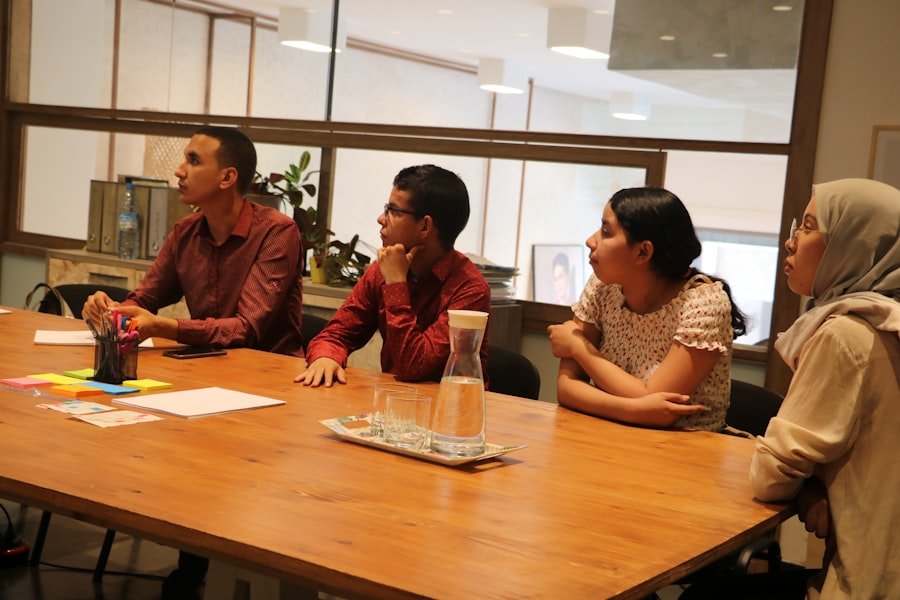
What is the Master Facilitator Workshop for Business Leaders and Entrepreneurs?
The Master Facilitator Workshop is a training program designed for business leaders and entrepreneurs to enhance their facilitation skills and learn advanced techniques for leading effective meetings and workshops.
Who is the target audience for the Master Facilitator Workshop?
The workshop is designed for business leaders, entrepreneurs, and anyone who wants to improve their facilitation skills and learn how to effectively lead meetings and workshops.
What are the key benefits of attending the Master Facilitator Workshop?
Attendees will learn advanced facilitation techniques, gain practical experience in leading meetings and workshops, and develop the skills to create engaging and productive group discussions.
What topics are covered in the Master Facilitator Workshop?
The workshop covers a range of topics including advanced facilitation techniques, effective meeting and workshop design, managing group dynamics, and handling challenging situations.
How can I register for the Master Facilitator Workshop?
Registration details for the workshop can be found on the official website or by contacting the organizers directly.