
If you’re wondering if AI content creation training is worthwhile, the short answer is definitely yes, particularly if you want to increase your productivity, creativity, and efficiency. Instead of thinking of it as replacing your brain, think of it as providing it with an extremely quick and intelligent intern who is always willing to come up with ideas or produce a first draft. This isn’t about magic; rather, it’s about discovering how to use strong new tools to realize your own creative potential. Is Training for AI Content Creation Actually Required?
Although the concept of AI producing content may seem like something from science fiction, it is already a reality and is developing quickly. You may be wondering if using these tools requires any particular training. It’s similar to asking if you require instruction to use a calculator.
For those interested in enhancing their skills in AI content creation, a valuable resource can be found in this related article on training programs offered by various providers. You can explore comprehensive training options that focus on the latest advancements in AI technology and content generation techniques. To learn more about these opportunities, visit this link.
You can just start punching numbers, but you’ll get much better results faster if you know the functions and how to apply them strategically. The same is true of AI content tools. Although you can experiment and produce some basic results, it takes some skill to truly harness their power to address your particular creative challenges. The Changing Content Landscape.
The field of creating content has always been dynamic. From the era of handwritten manuscripts to the emergence of digital publishing & social media, methods & tools have evolved continuously. Simply put, artificial intelligence is the most recent—and possibly most important—evolution.
Join us for an exciting Training Seminar on quantum facilitation techniques.
Long-term growth cannot be achieved by ignoring it. Rather, consider AI as a tool that can enhance your current abilities and create completely new channels for expression and communication. Beyond the Hype: Useful Applications. The breathless announcements about AI’s potential are easy to get sucked into.
As the demand for AI content creation continues to grow, professionals are seeking effective training programs to enhance their skills in this area. One such opportunity is highlighted in a recent article that discusses a comprehensive program designed for aspiring quantum facilitators. This program not only covers the fundamentals of AI content generation but also delves into advanced techniques that can significantly improve the quality of digital content. To learn more about this innovative training, you can visit the article here: program for quantum facilitators.
However, the true value for content producers is in how these tools can actually enhance their workflow. This entails spending less time staring at a blank page, more time honing your distinct voice, and the capacity to generate more and different kinds of content. Cutting through the clutter and concentrating on the useful, daily advantages is made easier with training.
What Will You Learn in Training for AI Content Creation? A good program will give you a firm grasp of how AI functions in the context of creative output and, more importantly, how to command it. The curriculum for AI content creation training can vary. In order to ask AI the right questions & decipher its responses, it’s important to learn its language. Recognizing AI models & their advantages. Although you don’t have to be a programmer, it is essential to comprehend the fundamental ideas underlying AI content generators.
Understanding the distinctions between different models (such as large language models, or LLMs) & their ideal applications is part of this. For example, one AI may be superior at producing succinct product descriptions, while another may be more adept at writing creative fiction or lengthy blog posts. Various AI Content Generator Types. For text generation, large language models (LLMs) are the most popular kind. They can comprehend context, produce text that resembles that of a human, and carry out a variety of language-based tasks because they have been trained on enormous text and code datasets.
Image Generation AI: New avenues for visual storytelling are made possible by programs like DALL-E 3 and Midjourney, which generate visual content from text prompts. Video and Audio AI: Although they are typically less developed than text and image generators, emerging tools are beginning to produce or help with the creation of video and audio content. Asking is the art of prompt engineering. Perhaps the most significant ability you will acquire is this one. The process of creating efficient commands (prompts) for AI models to produce the intended results is known as prompt engineering.
Typing a straightforward request is not enough; you also need to define your audience, provide context, specify tone, and direct the AI toward your particular objectives. While well-written prompts can yield genuinely amazing outcomes, poor prompts produce generic, uninspired content. Important components of successful prompts. Clarity & Specificity: Describe your goals in detail. Instead of writing “write a blog post about dogs,” consider writing “a funny, 800-word blog post for new dog owners about the joys and challenges of potty training a puppy.”.
A “. Contextual Information: Describe the situation. Mention a product’s features, target market, and unique selling propositions when writing about it. Tone & Style: Indicate the voice you want.
Do you require it to be formal, informal, humorous, motivational, or technical? Format and Length: Specify the format and word count. “Make a list of five suggestions in bullet points,” or “Write a 200-word summary of this article.”. A “.
Examples (Few-Shot Learning): In certain cases, giving the AI a few examples of the desired output can greatly enhance its comprehension. Strategies for Iteration and Improvement. AI is rarely a magic bullet that produces flawless content every time.
Instead of just assigning tasks to the AI, training will teach you how to work with it. This entails learning how to modify the AI’s output to match your vision, ask follow-up questions, and iteratively improve prompts. It is a cooperative process. The AI Feedback Loop. The most skilled AI content producers approach it as a conversation.
You give the AI an initial prompt, examine the results, pinpoint areas that need work, and then give it more prompts to give feedback. This might entail asking it to elaborate on a particular idea, reword a sentence, or take a different stance. Limitations and Ethical Issues. It’s critical to use AI responsibly. The ethical ramifications of AI-generated content, such as plagiarism, bias, transparency, and copyright, should be covered in training programs. It’s also essential to comprehend AI’s limitations, including when it can be used and when human oversight is essential.
Preventing false information and plagiarism. Paraphrasing and Attribution: Although AI is capable of producing text, it’s crucial to make sure the result doesn’t unintentionally copy content. Techniques for paraphrasing and correct attribution when needed will be covered in the training. Fact-checking: Inaccurate information may occasionally be “hallucinated” or presented as fact by AI models. Always verify the accuracy of any AI-generated content, particularly when it comes to sensitive or factual subjects. How Training in AI Content Creation Enhances Your Creative Potential.
There is a widespread misperception that AI inhibits creativity. In actuality, AI has the potential to be a potent stimulant for innovation and creative inquiry when applied properly. It can assist you in overcoming creative blocks and identifying fresh perspectives that you might not have thought of on your own. Breaking Through Creative Blocks.
For creatives, the dreaded blank page is a universal enemy. AI can give you a quick place to start by providing a range of perspectives, concepts, and even early drafts that you can expand upon. This frequently removes the first psychological obstacle to beginning, freeing up your mental energy for more creative and strategic work. Idea generation and brainstorming. Examining Diverse Perspectives: Request ten distinct headlines for a blog post about sustainable fashion from an AI.
There will probably be a variety of options available to you, some of which may inspire completely new paths. Developing Concepts: An AI can help you develop a concept by offering thematic elements, character archetypes, or plot points. broadening your horizons for content. AI has the potential to democratize new types of content production.
AI image generators can assist you in producing supporting graphics if your primary focus is writing. AI text generators can assist visual artists in creating captivating narratives or descriptions for their creations. Traditional barriers between various creative disciplines are dismantled. expanding the variety of content formats. AI can assist in writing scripts for podcasts, videos, and even short films by offering dialogue and scene changes.
Social Media Content: Quickly create a range of platform-specific social media posts, such as tweets, Instagram captions, and LinkedIn updates. Developing Your Own Voice. In contrast to concerns about homogenization, AI training can actually help you hone & enhance your distinct voice.
You can more effectively communicate your creative intent by learning how to influence AI to adopt particular tones and styles. You can then use the AI’s output as a blank canvas to add your own subtle changes & unique touches, elevating the finished product and making it uniquely yours. The Human Touch in AI Results. Injecting Personality: While AI is capable of producing informative and grammatically correct text, it frequently lacks true personality or emotional nuance. You learn how to edit and add your own distinctive sentiment & artistic flourishes to the AI’s output during training.
Strategic Storytelling: Although AI is capable of creating stories, you are still in charge of crafting gripping tales with emotional resonance, which is a sign of exceptional human creativity. You supply the soul, but AI can supply the framework. AI Content Training Will Give You Useful Skills. Regardless of your industry or particular role, the skills you gain from AI content creation training are very useful and instantly applicable to your work. These are real skills that can change the way you work, not just ideas.
Optimizing Your Process. The notable boost in productivity is one of the most direct effects of AI training. Tasks that previously took hours can now be accomplished in minutes, freeing up valuable time for higher-level strategic thinking, deeper creative refinement, and client interaction. automating tasks that are repetitive.
First Draft Generation: Instead of agonizing over the opening paragraph, use AI to generate several initial drafts, then pick the best and start refining. Summarization and Repurposing: Quickly summarize long articles or reports, or repurpose existing content into different formats for various platforms. Outline Creation: Generate detailed outlines for articles, presentations, or books to provide a solid structural foundation. Improving Content Quality and Consistency.
AI can help maintain a high standard of quality and consistency across all your content, especially when working on larger projects or as part of a team. It can ensure a consistent tone, terminology, & adherence to style guides. Maintaining Brand Voice. Style Guide Adherence: Train AI on your brand’s specific style guide to ensure all generated content reflects your established voice and messaging. Consistent Terminology: Ensure technical terms or product names are used consistently throughout all your content.
Expanding Your Skillset and Marketability. Learning to effectively use AI tools makes you a more valuable asset. In today’s rapidly evolving job market, possessing AI literacy is becoming a significant differentiator. Becoming a More Versatile Creator. Multidisciplinary Capabilities: A writer can learn to generate basic visuals; a designer can learn to craft compelling copy.
AI bridges these gaps. Adapting to New Technologies: You’re not just learning to use one tool; you’re learning a fundamental skill that will apply to future AI advancements. Where to Find Quality AI Content Creation Training. With the surge in AI’s popularity, numerous training options are emerging.
It’s important to choose programs that offer practical, hands-on learning and focus on real-world application, rather than just theoretical concepts. Online Courses and Platforms. The most accessible and diverse range of training options are typically found online. Look for platforms that offer structured learning paths, expert instructors, and opportunities for practice. Popular Online Learning Platforms.
Coursera/edX: Offer university-level courses and specializations that often delve into the technical and practical aspects of AI, including content creation. Udemy/Skillshare: Provide a wide array of more niche and practical courses taught by industry professionals. Search specifically for “AI content creation,” “prompt engineering,” or “AI for writers/marketers. “. Dedicated AI Training Providers: Some companies specialize solely in AI training and offer focused courses on AI content generation tools and strategies.
Workshops and Bootcamps. For a more intensive & immersive learning experience, consider workshops or bootcamps. These often involve live instruction, collaborative projects, and direct feedback. Benefits of Intensive Training. Hands-on Practice: These formats are ideal for immediate application and skill development.
Networking Opportunities: You’ll often be in a cohort with other professionals, allowing for valuable peer learning and networking. Direct Instructor Interaction: You get immediate answers to your questions and personalized guidance. In-House and Corporate Training. Many organizations are now offering AI training to their employees to ensure they can leverage these tools effectively. If you work for a larger company, inquire about internal training programs.
This can be tailored to your company’s specific needs & workflows. Tailored to Your Organization’s Needs. Customized Curriculum: Content can be designed to address the specific AI tools and content challenges your company faces. Team Collaboration: Training can foster a shared understanding and consistent application of AI tools across departments.
The Future of AI in Content Creation: Evolution, Not Extinction. It’s natural to feel a bit apprehensive about how AI will shape the future of content creation. Will it replace human creators?
The overwhelming consensus is no. Instead, AI is poised to become an indispensable partner, augmenting human creativity and pushing the boundaries of what’s possible. Embracing AI as a Creative Collaborator. Think of AI not as a competitor, but as a powerful assistant.
It can handle the heavy lifting of initial drafts, research, and repetitive tasks, allowing you to focus on the strategic, innovative, and emotionally resonant aspects of your work that AI cannot replicate. The Human Element Remains Crucial. Emotional Intelligence: AI can process data but lacks genuine empathy, intuition, and lived experience, which are core to compelling storytelling and connection. Strategic Vision: AI can generate content, but it doesn’t possess strategic foresight, ethical judgment, or the intuitive understanding of a target audience’s deepest needs and desires. Originality & Nuance: True originality & the subtle nuances of human expression are still the domain of human creators.
AI can mimic, but it doesn’t innovate in the same way. Continuous Learning and Adaptation. The field of AI is constantly evolving. What is cutting-edge today will be standard tomorrow.
Therefore, AI content creation training isn’t a one-and-done event. It’s the beginning of a journey that requires continuous learning and adaptation. Staying curious and embracing new developments will be key to staying ahead. Staying Ahead of the Curve. Experimentation: Regularly experiment with new AI tools and features to understand their capabilities.
Community Engagement: Connect with other creators using AI to share knowledge, best practices, and insights. Ongoing Education: Make a habit of seeking out updated training or resources as AI technology advances. Ultimately, AI content creation training is an investment in your future as a creator. It’s about equipping yourself with the skills and knowledge to not only survive but thrive in the evolving landscape of content.
By embracing these tools strategically and ethically, you can unlock new levels of creativity, efficiency, & impact.
.
FAQs
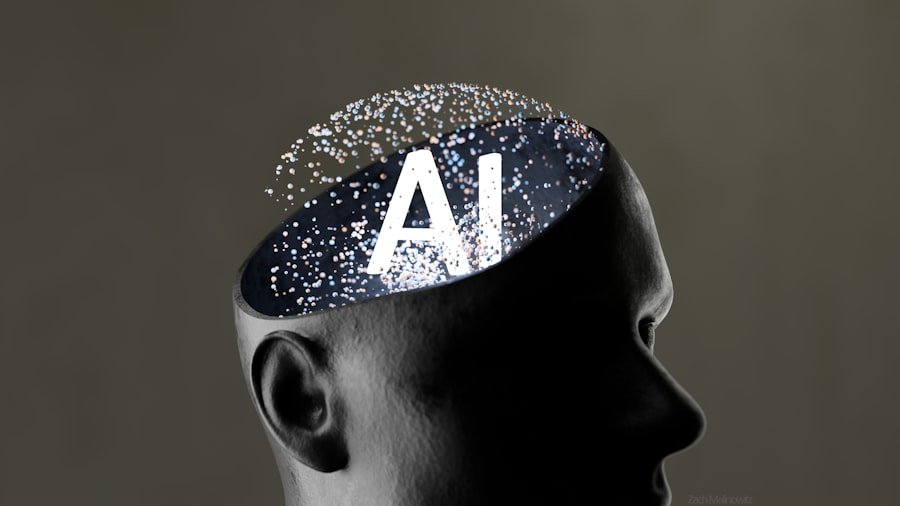
What is AI content creation training?
AI content creation training refers to the process of using artificial intelligence technology to train algorithms to generate written content, such as articles, blog posts, and marketing materials. This training involves teaching the AI model to understand language, context, and style in order to produce high-quality, human-like content.
How does AI content creation training work?
AI content creation training works by feeding large amounts of text data into an AI model, which then uses natural language processing and machine learning techniques to analyze and understand the patterns and structures of the language. The model is trained to generate new content by predicting and generating text based on the patterns it has learned from the training data.
What are the benefits of AI content creation training?
The benefits of AI content creation training include the ability to generate large volumes of content quickly, improve content quality and consistency, and reduce the time and resources required for content creation. AI content creation training also allows for personalized and targeted content creation based on specific audience preferences and behaviors.
What are the potential challenges of AI content creation training?
Some potential challenges of AI content creation training include the risk of generating low-quality or inaccurate content, the need for ongoing monitoring and refinement of the AI model, and concerns about the ethical implications of using AI to create content. Additionally, there may be challenges related to maintaining the originality and creativity of the content generated by AI.
How is AI content creation training being used in the industry?
AI content creation training is being used in various industries, including marketing, publishing, e-commerce, and journalism. Organizations are leveraging AI content creation training to automate content generation, improve search engine optimization, and enhance customer engagement through personalized and targeted content. Additionally, AI content creation training is being used to streamline content production processes and reduce costs associated with content creation.